
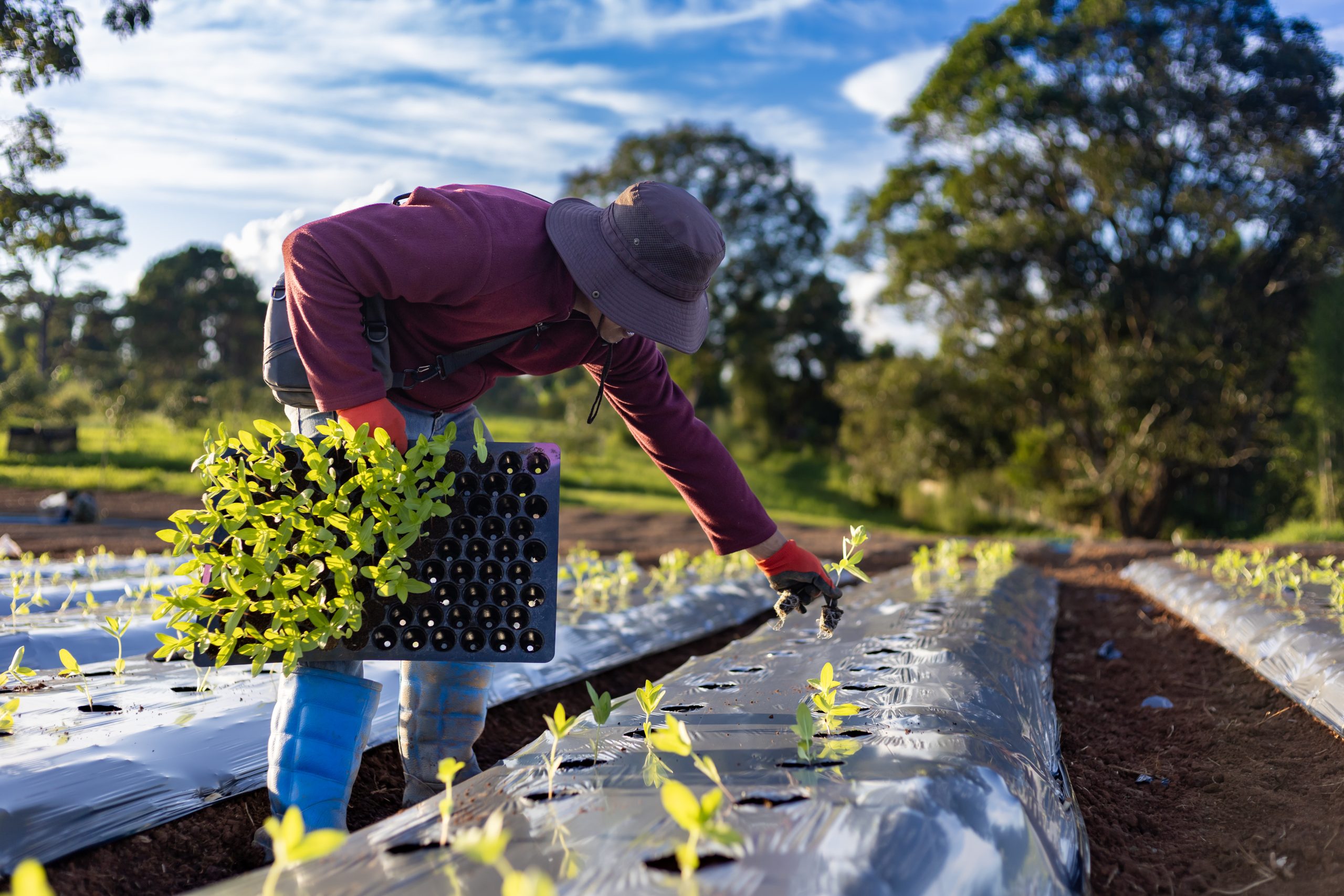
Bogor, September 2026 – Have you ever seen plastic mulch with a silver-colored surface?
The silver color on mulch is not simply a matter of appearance. A silver surface can reflect part of the solar radiation, helping reduce heat absorption compared to surfaces that absorb more radiation. Therefore, silver color is one of the important characteristics in mulch applications.
However, after understanding why mulch uses a silver surface, the next question is: “Does every silver have the same quality?”
In the production process, manufacturers need to achieve not only the desired silver color but also the way the silver appearance is formed on the product surface.
The expected silver surface generally has a uniform and glossy appearance with minimal spots. This is where factors such as pigment, material quality, moisture, and dispersion become important. And the discussion does not stop at appearance.
Let’s look at three important factors to consider in mulch production.
1. Why Can Silver Mulch Have Spots?
One of the most visible aspects of mulch is the quality of its silver surface.
Customers generally expect a glossy, uniform, and spot-free silver appearance. When spots appear on the surface, the issue is not always caused by the silver color itself.
One factor to consider is pigment dispersion. During the production process, the pigment needs to be distributed evenly throughout the material. Poor dispersion can contribute to inconsistencies in the surface appearance.
In addition to pigment, several other factors can also have an impact, including resin and raw material quality, moisture conditions during processing, and the use of recycled materials.
This means that when discussing silver mulch, the question is not only, “Is the silver color correct?” but also, “How is the pigment dispersed during the production process?”
This is particularly important for thin films, where even small inconsistencies can become directly visible on the product surface. For manufacturers, the challenge is not simply achieving a silver color, but producing a consistent silver appearance that meets the target product requirements.
2. Why Does Mulch Need the Right Durability?
Mulch is used in outdoor environments throughout the crop growth period. This means that during its service life, the product is continuously exposed to sunlight and environmental conditions in the field. The required service life can vary depending on the crop, cultivation conditions, product characteristics, and application requirements.
One environmental factor that needs to be considered is UV exposure. Therefore, the more relevant question is not simply, “Does mulch need a UV stabilizer?” but rather, “What type of UV protection system is suitable for the mulch’s intended conditions of use?”
Based on these requirements, the need for UV stabilization can be considered more appropriately. This is where the selection of a UV protection system needs to be aligned with the application, rather than being based solely on the type or level of additive.
3. When Mulch Is Exposed to Pesticides, Is a Standard UV Additive Always Enough?
Another factor that needs to be considered in agricultural applications is exposure to chemicals from cultivation activities, including pesticides.
Mulch used in the field may be exposed to vapors or chemicals resulting from pesticide use. Such exposure can affect the effectiveness of the UV stabilization system and, ultimately, may influence the durability of the mulch during use.
Therefore, for applications involving exposure to certain chemicals, a UV Additive with chemical-resistant characteristics may be one of the requirements that needs to be considered.
In other words, the selection of a UV Additive should consider the question: “What conditions will the mulch face during its service life?”
For specific requirements, a UV Additive system with chemical-resistant characteristics can provide a different approach to protection compared to a UV Additive intended for more general conditions of use.
However, these requirements still need to be adjusted according to the target performance and cost of the final product.
So, What Should Actually Be Considered?
From silver appearance to UV durability, the requirements for mulch production do not stand alone. Several questions need to be understood from the beginning:
- What type of appearance do you want to achieve?
- How do you produce a uniform surface with minimal spots?
- How long should the product characteristics be maintained?
- What level of UV exposure will the mulch experience during use?
- Is there any chemical exposure that needs to be considered as an additional factor?
These questions help connect the requirements of the final product with technical considerations during the production process.
Therefore, mulch is not simply about achieving a silver color. Behind the silver appearance are various requirements that need to be understood based on the material, production process, target service life, and application conditions in the field.
The clearer the application requirements, the more targeted the discussion can be regarding the masterbatch—both color and additive—needed for the application.
Kasakata Masterbatch helps manufacturers understand these requirements from both application and process perspectives, so that the solutions considered can be aligned with the desired product requirements.
Need a Masterbatch Solution for Mulch Applications?
Discuss your material, production process, and product requirements with the Kasakata Masterbatch team. click here