
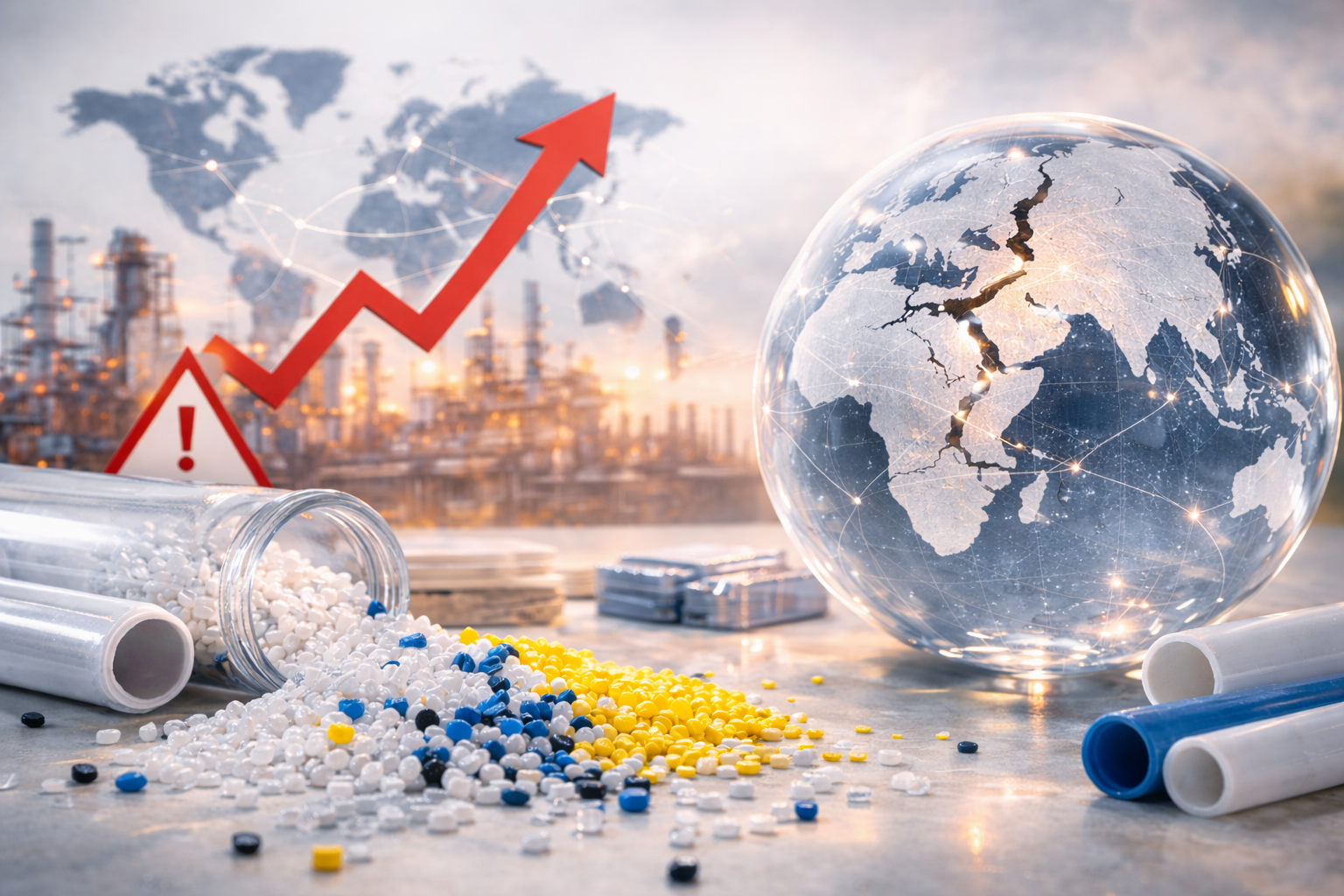
Bogor, March 2026 – Geopolitical tensions in the Middle East have once again attracted global
attention due to their potential to disrupt the stability of the global energy market. For the plastics
industry, these developments directly influence the prices of petroleum-derived resin raw
materials.
The Middle East Conflict and the Global Petrochemical Industry
Geopolitical conflicts in the Middle East can significantly impact the global petrochemical
industry. The region is one of the world’s major oil-producing centres, and oil serves as the
primary raw material for plastic resin production.
Rising tensions involving Iran, Israel, and the United States are increasing uncertainty
surrounding global energy supplies. These conditions have the potential to disrupt the stability
of petrochemical production and drive fluctuations in plastic resin prices in the international
market.
Relationship between Petroleum and Plastic Resin Production
Most plastic materials are produced from petroleum derivatives through petrochemical
processes. Resins such as polyethylene (PE), polypropylene (PP), and polyvinyl chloride
(PVC) are the primary raw materials used in various plastic applications.
When crude oil prices rise or global energy distribution is disrupted, petrochemical production
costs also increase. These conditions ultimately impact the prices of plastic resins in the global
market and affect the cost structure of production in the downstream plastics industry.
Global Plastic Resin Prices Under Pressure
The uncertainty surrounding energy supplies due to geopolitical conflicts can put pressure on
global plastic resin prices. In a market that is sensitive to changes in energy prices, resin price
volatility often occurs within a relatively short period of time.
For the plastics industry, rising resin prices are one of the primary factors affecting production
costs. Companies need to adjust their raw material procurement strategies and improve material
usage efficiency to maintain product competitiveness in the market.
Some of the key factors that can drive up plastic resin prices include:
- Rise in global crude oil prices
Oil prices are a key factor in the production of petrochemical feedstocks. - Disruptions in energy distribution and logistics
Geopolitical conflicts can disrupt global energy supply chains and drive-up
transportation costs. - Production uncertainty in energy-producing regions
If petrochemical production capacity is disrupted, resin supplies in the global market
could decline.
Impact on the Global Plastics Industry
The price increase for resin affects not only raw material producers but also the entire plastic
industry value chain. Manufacturing companies need to adjust their production strategies,
inventory management, and raw material procurement planning to anticipate price changes.
Some of the most affected industrial sectors include:
- Packaging industry
- Consumer goods industry
- Automotive industry
- Construction industry
Resin is the main component in plastic production, so changes in raw material prices can affect
the overall cost structure of production.
Risks of Resin Supply Chain Disruptions
Besides price increases, geopolitical conflicts can also heighten the risk of disruptions in the
global resin supply chain. The supply chain for plastic raw materials involves various parties,
ranging from petrochemical producers and resin distributors to downstream plastic
manufacturers.
In times of geopolitical conflict, the distribution of raw materials may face various challenges,
such as:
- limited access to energy transportation routes
- rising global logistics costs
- changes in policies regarding the export or import of raw materials
These conditions can cause delays in resin supply in certain regions and impact production
activities across various industrial sectors.
Mitigation Strategies for the Plastics and Masterbatch Industries
Faced with the dynamics of the global market, companies in the plastics and masterbatch
industries need to have the right strategies in place to ensure the stability of raw material
supplies and production efficiency. This strategic approach is particularly important when the
market faces volatility in raw material prices and supply chain uncertainty.
- Diversification of Raw Material Suppliers
One strategy that can be implemented is to diversify resin suppliers from various regions.
By having multiple sources of supply, the company can reduce the risk of relying on a
single source of raw materials. - More Accurate Production Planning and Forecasting
The company also needs to improve coordination between the procurement, production,
and sales teams to ensure more accurate production planning. Accurate demand
forecasts can help the company manage raw material inventory more efficiently. - Material Innovation and Production Efficiency
Also, innovations in material formulations and the efficient use of raw materials can help
companies optimize their production processes. In the plastics industry, the use of the
right masterbatches and additives can improve material efficiency while maintaining the
quality of the final product.
Global Plastics Industry Outlook
Although geopolitical conflicts can affect the stability of the energy and raw materials markets,
global demand for plastic products remains strong in several key sectors, such as packaging,
agriculture, and medical products.
This indicates that the plastics industry continues to play a vital role in supporting various sectors
of the global economy.
The Role of Material Innovation in Responding to Market Dynamics
Amidst dynamic raw material prices and global supply chain uncertainties, material innovation
has become a key factor in maintaining production stability in the plastics industry.
The use of the right masterbatches and additives can help companies improve resin utilization
efficiency, maintain product quality consistency, and optimize production processes.
As a company specializing in the development of masterbatches and plastic additives, Kasakata
Masterbatch remains committed to providing material solutions that support the needs of the
plastics industry across various sectors, including packaging, agriculture, and consumer goods.
With an understanding of the dynamics of the global raw material market, the company strives
to help customers maintain production stability and improve material efficiency amid changing
market conditions.
Kasakata Masterbatch – Innovative Materials. Optimized Results. Sustainable Impact.